
Bridging the Employability Gap: How NASSCOM’s ASCEND Is Building India's Future Workforce
As India's demand for digital talent continues to grow, access to industry-relevant skills remains uneven. Through ASCEND, NASSCOM Foundation and nine technology SMEs have come together to equip marginalised youth with emerging technology skills, demonstrating how collaborative CSR can create pathways to employment and inclusion.
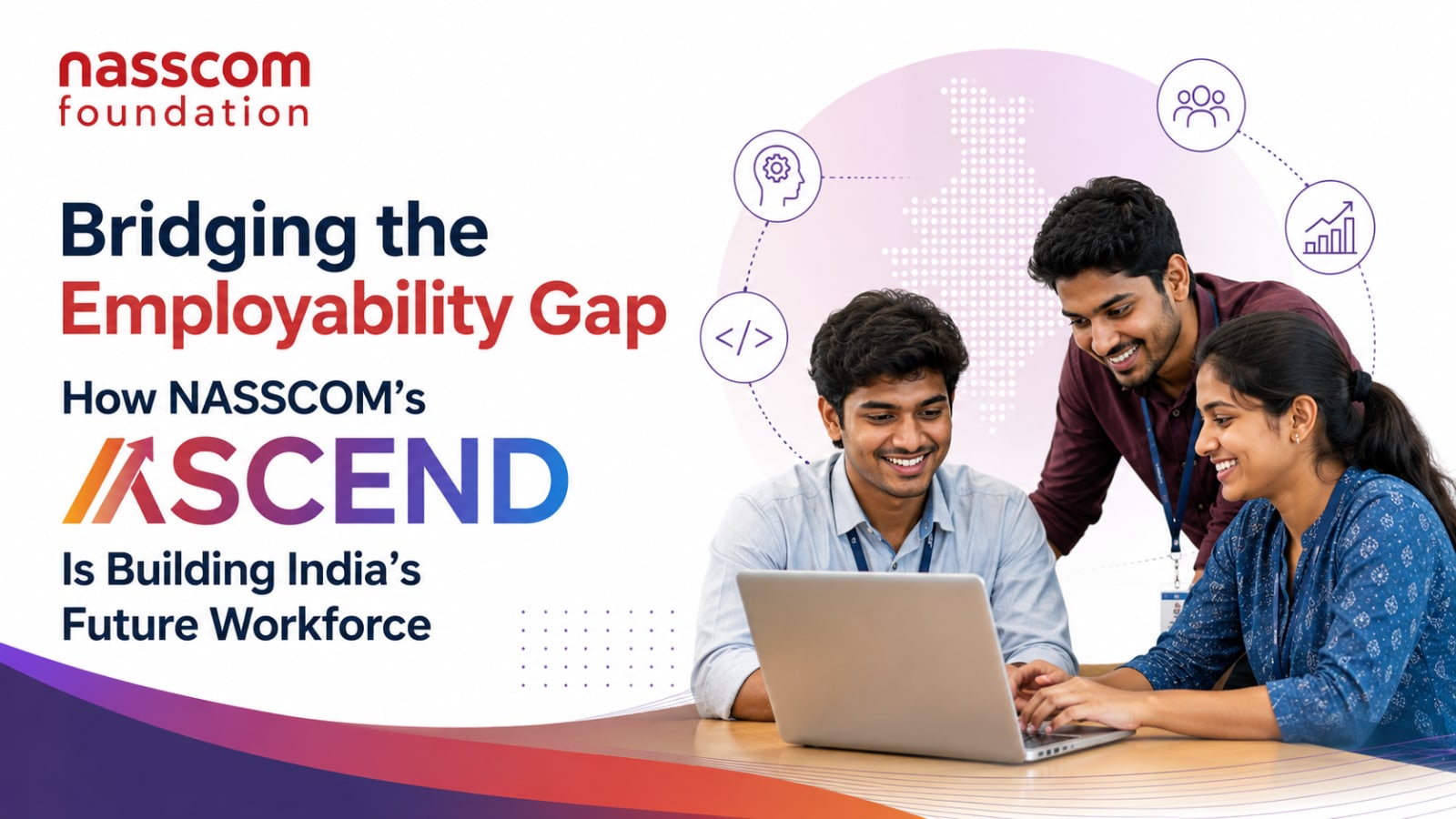
Though India's technology sector continues to power the country's economic ambitions, access to technology careers remains uneven. While businesses increasingly seek talent skilled in emerging fields such as data analytics, software development, and digital technologies, many young people from marginalised communities remain excluded from these opportunities. This is primarily due to a lack of access, training, and industry exposure.
According to a Global Skills Gap Report cited by NASSCOM Foundation, 92% of employees in India believe the country faces a significant skills gap, highlighting the growing disconnect between industry demand and workforce readiness.
Addressing this challenge requires more than individual corporate interventions. It calls for collaborative models that pool resources, expertise, and intent to create meaningful pathways into the digital economy.
Against this backdrop, NASSCOM Foundation, in partnership with the NASSCOM SME Council, launched the second edition of ASCEND: Skilling Youth in Emerging Technologies in 2025.
The initiative brings together nine technology SMEs, namely, NetWeb Software, IDS Infotech Limited, iLenSys Technologies, InApp, Integra, OutsourcingHubIndia, Trenser Technology Solutions, vCreaTek Consulting Services, and Axium Global.
The idea is to collectively equip marginalised youth with industry-relevant skills and employment opportunities.
Designed to train 150 young people across Delhi-NCR, Pune, and Thiruvananthapuram, the second edition of ASCEND focuses on high-demand domains such as Data Analytics and Java Full Stack Development, while also integrating soft skills, mentorship, and career-readiness training.
Interestingly, women are expected to comprise 60% of the beneficiaries. It reflects that the programme places inclusion alongside employability at the centre of its approach.
Significance of ASCEND
The initiative is built on the foundation of the success of NASSCOM’s previous such projects. According to a communique, the industry body has trained nearly 50,000 beneficiaries in one year, including around 21,000 learners in job-linked courses, with approximately 14,000 receiving employment offers.
Additionally, in a separate employment-linked programme with IG Group, 2,000 marginalized youth were trained and 480 received employment opportunities.
The significance of ASCEND extends beyond the numbers. At a time when conversations around digital transformation often centre on technology itself, the initiative highlights the importance of human capability.
Technology can only deliver its promise when people have the skills required to participate in and benefit from it. By focusing on employability, the programme seeks to ensure that economic growth is accompanied by wider access to opportunity.
Equally noteworthy is the model through which the initiative has been designed. CSR efforts in India have traditionally been driven by large corporations with substantial resources and established social impact programmes. Smaller enterprises, despite their commitment to social development, frequently face limitations in scale and reach. ASCEND demonstrates how collaboration can help overcome those constraints. By sharing responsibility and working toward a common goal, multiple organisations can collectively create pathways that neither may have been able to build on their own.
The initiative also reflects a growing recognition within the technology sector that talent development is not solely an educational challenge. Rather, it is an ecosystem challenge. Industry participation, mentorship, exposure, etc are all critical to helping young people transition successfully into the workforce. Through this initiative, the participating SMEs are contributing the insights and networks that can help learners navigate that transition.
Making A Future-Ready Workforce
As India continues its journey toward becoming a global digital powerhouse, the demand for skilled talent is expected to grow further. Programmes such as ASCEND responds to this challenge by connecting underserved youth with the skills, guidance, and opportunities needed to participate in the digital economy.
It is safe to say that NASSCOM demonstrates how collective action can expand the reach of CSR and create new possibilities for impact.
In doing so, the programme is not merely preparing young people for jobs. It is helping build a more inclusive talent pipeline for India’s digital future while offering a blueprint for how SMEs can come together to address complex social challenges through shared purpose and collaboration.
Read Next
More stories

Have a person, achievement or story our editors should know about?
Submit a Story
Stories worth telling, in your inbox.
Get the latest People Who Matter features delivered weekly.
Subscribe NowDiscussion
No comments yet. Be the first to share your thoughts.