
Blue Tokai: How Indian Coffee Became a Premium Habit
A specialty roaster helped make Indian-grown coffee part of a new urban ritual. The harder question is how to sustain that promise at scale.
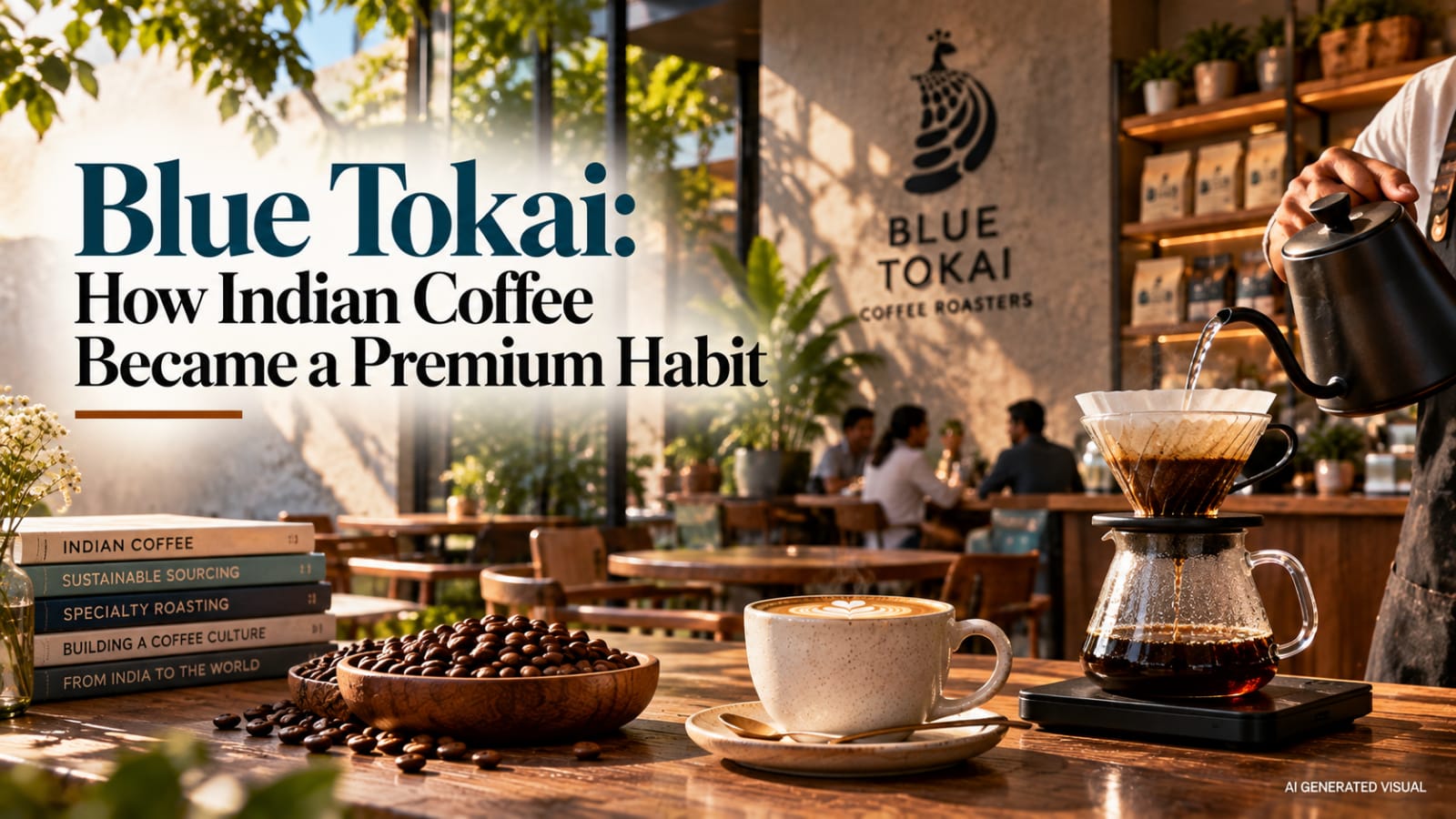
A specialty roaster helped make Indian-grown coffee part of a new urban ritual. The harder question is how to sustain that promise at scale.
A coffee-growing country rediscovers its beans
India has long produced coffee, yet many urban consumers historically encountered it primarily as instant coffee or a café beverage with little information about origin. Blue Tokai helped introduce a different conversation: which estate grew the beans, how they were roasted and what flavour a customer might expect.
The founders’ early experience, as described in interviews, began with a search for freshly roasted coffee and evolved into a business built around sourcing, roasting and helping customers appreciate specialty coffee. [Blue Tokai founders interview]
The café is a classroom as well as a shop
A customer does not need to understand processing methods to enjoy a cappuccino. But a good café can gradually make origin, freshness and brewing choices feel accessible rather than intimidating. That educational role can differentiate a specialty brand from a chain selling convenience alone.
Blue Tokai’s cafés, packaged beans and online channels reinforce one another. Someone may discover the coffee in a café, buy beans for home and later return for the atmosphere. Each encounter gives the brand another opportunity to earn trust.
The growers belong in the story
Premium coffee branding often celebrates flavour and design. Its credibility also depends on what happens earlier in the supply chain. Estate relationships, transparent sourcing and predictable demand can help explain why a product costs more.
Co-founder Shivam Shahi has discussed the challenge of persuading growers to supply premium coffee and the company’s expansion across physical and digital channels. Those accounts reflect the company’s perspective and should not be mistaken for an independent assessment of farmer outcomes. [Fortune India Shivam Shahi profile]
Can an experience survive expansion?
A small roastery can closely supervise every batch and customer interaction. A growing café network must maintain training, consistency, sourcing quality and service across locations. Growth also introduces rent, staffing and supply-chain pressures.
The tension is familiar in premium consumer businesses: customers want a distinctive experience, but the company needs enough scale to make that experience financially sustainable. Expanding without becoming generic is a strategic challenge, not just a marketing problem.
The larger change in Indian consumption
Blue Tokai’s story is not simply that more people drink coffee. It is that some consumers are willing to learn about and pay for a product with a clearer identity, stronger provenance and a ritual around it.
That shift creates opportunities for Indian growers and homegrown brands. The enduring test is whether premiumisation delivers lasting quality and value, not merely a higher-priced cup.
Tags
Read Next
More stories

Have a person, achievement or story our editors should know about?
Submit a Story
Stories worth telling, in your inbox.
Get the latest People Who Matter features delivered weekly.
Subscribe NowDiscussion
No comments yet. Be the first to share your thoughts.